
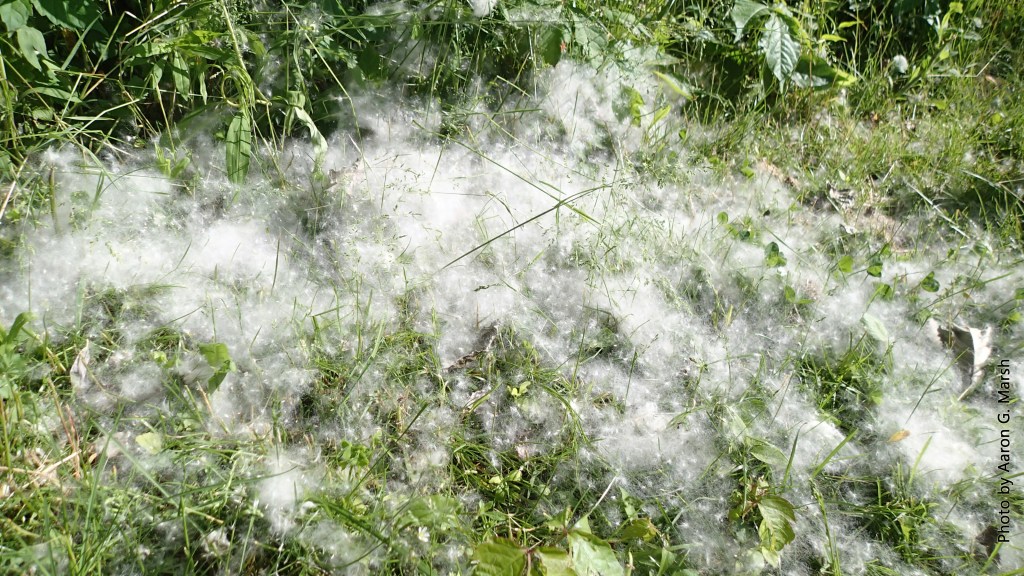
It makes for a surreal and almost strangely idyllic scene: sun blazing warm and bright overhead in a clear sky, grass deeply green and lush, trees filled with young leaves, bushes bursting with flowers of rich colors, a soft, summery breeze in the air… and snow flurries drifting and floating all around.
Only it’s not snow at all. Those are seeds from populus deltoides, or cottonwood trees, each one attached to a little tuft of cottony fluff. You’ll find cottonwoods spotted through areas like western Connecticut, where I’m located; you can identify them by the clumps of white fuzz hanging in their leaves and their fissured bark.
It’s usually around the start of June that you’ll see cottonwood seeds floating by in certain places. The particular conditions at the time affect how much you’ll see of the cottonwood seeds, and this year, a warm several weeks leading up to the beginning of June helped the seeds fall sooner and steadier, making for conditions akin to light snow flurries for a number of days.
The difference between the cottonwood seeds and actual snow is that the former can move upward and often float around, depending on how the wind is blowing and air is flowing. Snow, of course, mostly just falls down, even if it does swirl up and around in snow squalls and drifts.
The cottonwood seeds you’ll usually see mainly in late May and early June seem to be able to get into everything at times. Depending on conditions, they can collect in piles in cars’ hood and trunk gutters or congregate like snow drifts at the edges of driveways and elsewhere. And that’s not all that’s in the air now.
It can mean allergy flare-ups. Grass, weed and wildflower clippings from lawns, smoke and ash from grills and barbecues, many types of pollen and more are competing for your breathing space in that otherwise fresh, summery air.
If you’re in such an area and have felt a tickle or tightening in your throat or burning, irritated eyes, possibly accompanied by a runny nose and post-nasal drip, you’re not alone. A trip to the drug store to stock up on the all-day allergy relief meds of your choice and eye drops of similar purpose could be in order.
Other precautions are also advisable. When you’re heading outside to enjoy the weather, remember to prepare. Always use a good sunscreen of SPF 30 or higher, and apply it about 15 minutes before you’ll be exposed to the sun. If you’ll be near areas like trails, any foliage or standing bodies of water, with mosquitoes and ticks quite active and possibly carrying illnesses like Malaria and Lyme disease, tack on an insect repellant — and be sure to apply some near your lower legs and ankles, where ticks love to jump.
Content © Aaron G. Marsh. All rights reserved.



 I Do Not Like Mondays
Leave a comment