

As we get older, our brains get progressively duller and our minds get weaker, less active and less capable, right? We get more forgetful, with a loss of cognitive function. Is that the certainty we should expect?
In fact, many people don’t even know what to expect of the aging brain, according to a new study. The McKnight Brain Research Foundation found that a third of Americans “feel uninformed about” what’s normal as the brain ages, and most respondents — 87% — said they’re concerned about age-related memory loss and a decline in brain function as they get older.
The study, which polled 1,000 U.S. adults age 18 and older back in December, also found that only a third of respondents believe they can do anything to help control brain health as they age. That runs directly counter to the belief of Eric Christianson, co-author of “Eat to Think”, CEO of Reno, Nevada-based nutrition products provider Nutrient Survival, and U.S. Army veteran.
‘Entirely Controllable’?
“The fact of the matter is that only about 3% of our brain health is dependent upon our genetics,” Christianson contended on a recent conference call. “I think that’s a shocking fact for folks because they think well, hey, you know, [it just] ‘runs in the family.’ But the reality is 97% of our brain health is entirely controllable.”
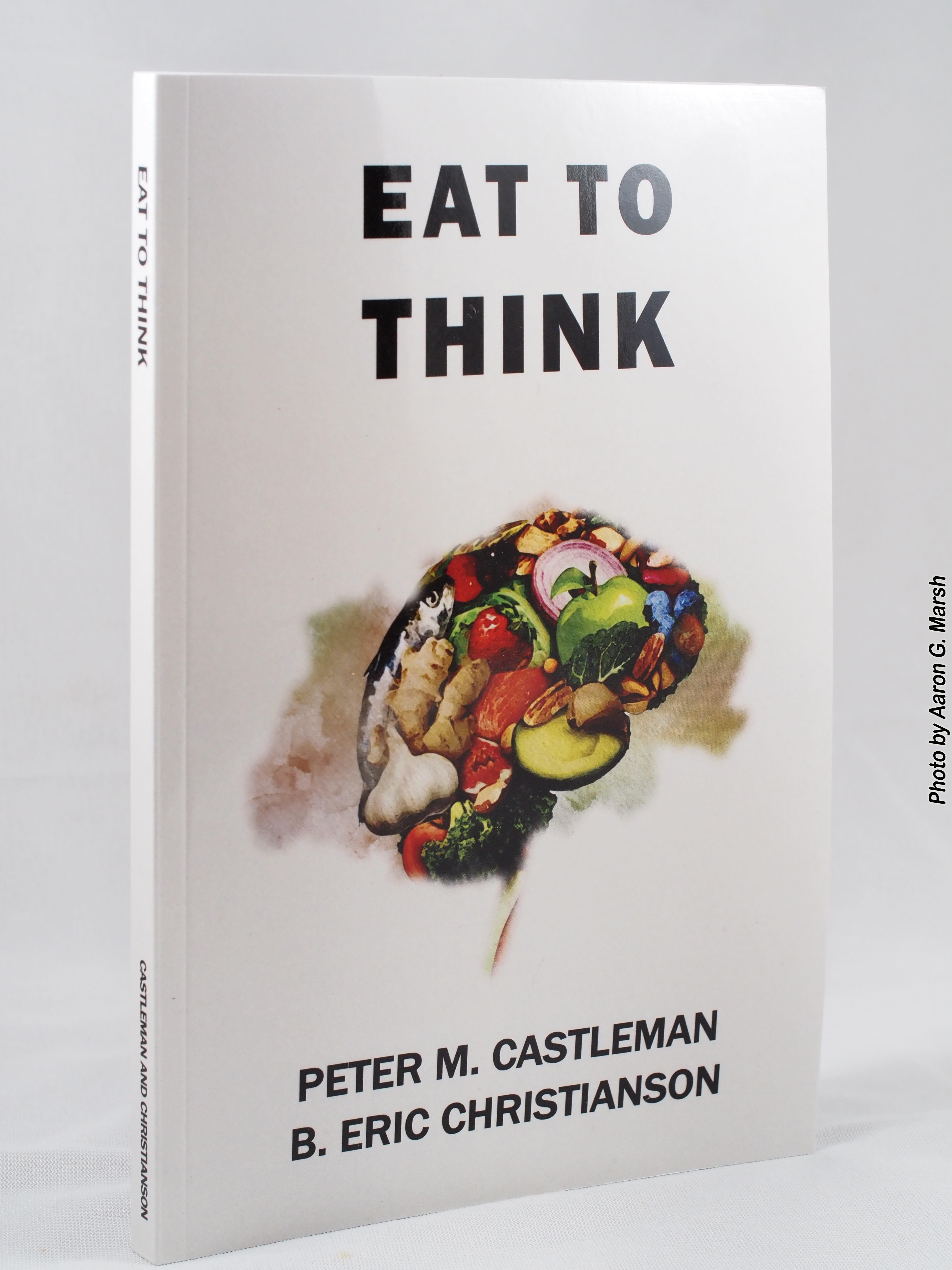
He noted that cognitive decline is a huge problem. “We’ve got one in three seniors that are dying with some form of dementia — one in three — because we’re living longer and people’s minds aren’t keeping up with them,” Christianson said.
But if nearly all (97%) of your brain health is controllable and based on lifestyle choices, what can be done to help? What should we be doing differently?
“Eat to Think” contends that our lifestyle choices — “how we live our lives and care for our bodies and minds” — can enhance and even renew health and brain power, or do the opposite. To sum things up, people aren’t getting enough exercise and are eating many of the wrong things today, according to the book: high sodium, junk food, trans fats, inflammatory oils, fried foods, high sugar, simple carbohydrates, artificial sweeteners and more.
So eating healthy means less of that stuff and more of the right stuff, including essential vitamins, minerals, amino acids, fatty acids, and fiber, as well as other special nutrients such as phosphatidylserine and polyphenols that may help reduce the effects of brain aging.
Of course, being a nutrition products provider, Nutrient Survival offers ways to help you get at these essentials and special nutrients that it contends will help with its new BrainCare line. More on that later.
Roadmap(s)
If you look, you can find a number of recommendations for healthier living and healthier brain aging. Not only will you see a good deal of crossover in those recommendations, you’ll also find that physical and brain health are, of course, inextricably linked.
“Eat to Think” offers a roadmap to healthier lifestyle called the “Six Pillars of Brilliance” to help keep the brain in top condition. Those pillars include:
1. Get enough sleep. During deep sleep, the brain repairs itself and consolidates information learned the previous day, according to the book, and good quality sleep enhances cognitive function.
2. Stay physically active. Yes, it helps keep your body in shape, and exercise can also do all sorts of good things for the brain, from stimulating mental capability and creative thought, to sharpening reaction time, to enhancing brain plasticity and cell growth.
3. Keep engaged mentally. “Stimulating your brain activates neural pathways, triggers lively neurotransmitter activity, expands tiny blood vessels in the brain, and builds connections for mental power,” the book states.
4. Reduce stress. Stress is a killer — there’s a growing body of evidence that it can damage your brain and take its toll in other physical ways. Try to reduce sources of stress and increase things that help with stress such as practicing deep breathing exercises or pursuing spiritual activities. And get more massages!
5. Love. “Love is not just an emotion; it is an action that is critical for long-term brain health,” the book states. The so-called “love hormone,” oxytocin, not only boosts mood but may have positive effects on memory and brain function.
6. Get the right nutrition. “Nutrition is extremely important, as it affects the other five pillars,” the book notes. “We are each given a gift: our bodies and minds. How we care for them determines how they care for us.”
Those six recommendations resonate well with tips from the McKnight Brain Research Foundation, which suggests that you:
1. Watch after your physical health by getting health screenings and managing any chronic health problems like diabetes and high blood pressure.
2. Eat a healthy and balanced diet that’s high in vegetables and fruit and low in fat.
3. Exercise, because studies have linked regular physical activity with a reduced risk of cognitive decline. Regular cardiovascular exercise elevates the heart rate and increases blood flow to the brain and body.
4. Keep your mind active with activities like puzzles, carpentry or playing games that encourage strategic thinking. The foundation also suggests learning a new language, skill or hobby to help keep your mind sharp.
5. Don’t forget mental health. “Studies have linked depression with an increased risk of cognitive decline,” the foundation notes, so try your best to manage stress and get medical help with any symptoms of depression.
6. Stay connected, because social and intellectual engagement is important to brain health, according to the foundation.
7. And lastly — you guessed it — get enough sleep. Getting enough sleep can strengthen and help protect your brain, while sleep depravation can cause problems with memory and cognitive ability.
And meanwhile, the Alzheimer’s Association offers 10 behaviors to help encourage a healthy brain, including:
1. Challenge your mind by learning new skills or doing artistic things. Shake loose from your mental norms!
2. Stay in school — encourage youths to get the highest training possible and try to stay learning yourself by taking ongoing classes of some kind, if possible.
3. Exercise more to get that blood flowing to your brain and body.
4. Protect your head from injuries by wearing your seatbelt and wearing a helmet when biking, etc.
5. Don’t smoke, because smoking is associated with oxygen deprivation and an increased risk of cognitive decline.
6. Control your blood pressure with a healthy diet, exercise and, if needed, medication.
7. Manage diabetes, a disease that is also associated with a greater risk of cognitive decline.
8. Eat a healthy diet that includes more vegetables and leaner meats/ proteins and fewer processed foods.
9. Maintain a healthy weight. Being overweight goes along with poor circulation, high blood pressure, and a variety of other health conditions that can contribute to the brain’s decline and loss of cognitive function and capability.
10. Get enough sleep. There’s that recommendation again! Getting enough high-quality sleep can help keep your brain healthy. The Alzheimer’s Association recommends staying away from screens like laptops and tablets before bed, making your sleep space as comfortable as possible, doing all you can to minimize disruptions, and seeking medical help for any sleep-related problems like sleep apnea.
Getting at Better Brain Nutrition — My Experience
Since Nutrient Survival emphasizes better nutrition as one of the most important supporting “pillars” of brain health and long-term brain regeneration, I decided to try out the company’s BrainCare bars and see if I could discern any noticeable improvement or mental gain from them. Granted, I don’t have any cognitive decline I’m trying to counter, but I wanted to see what these are all about.
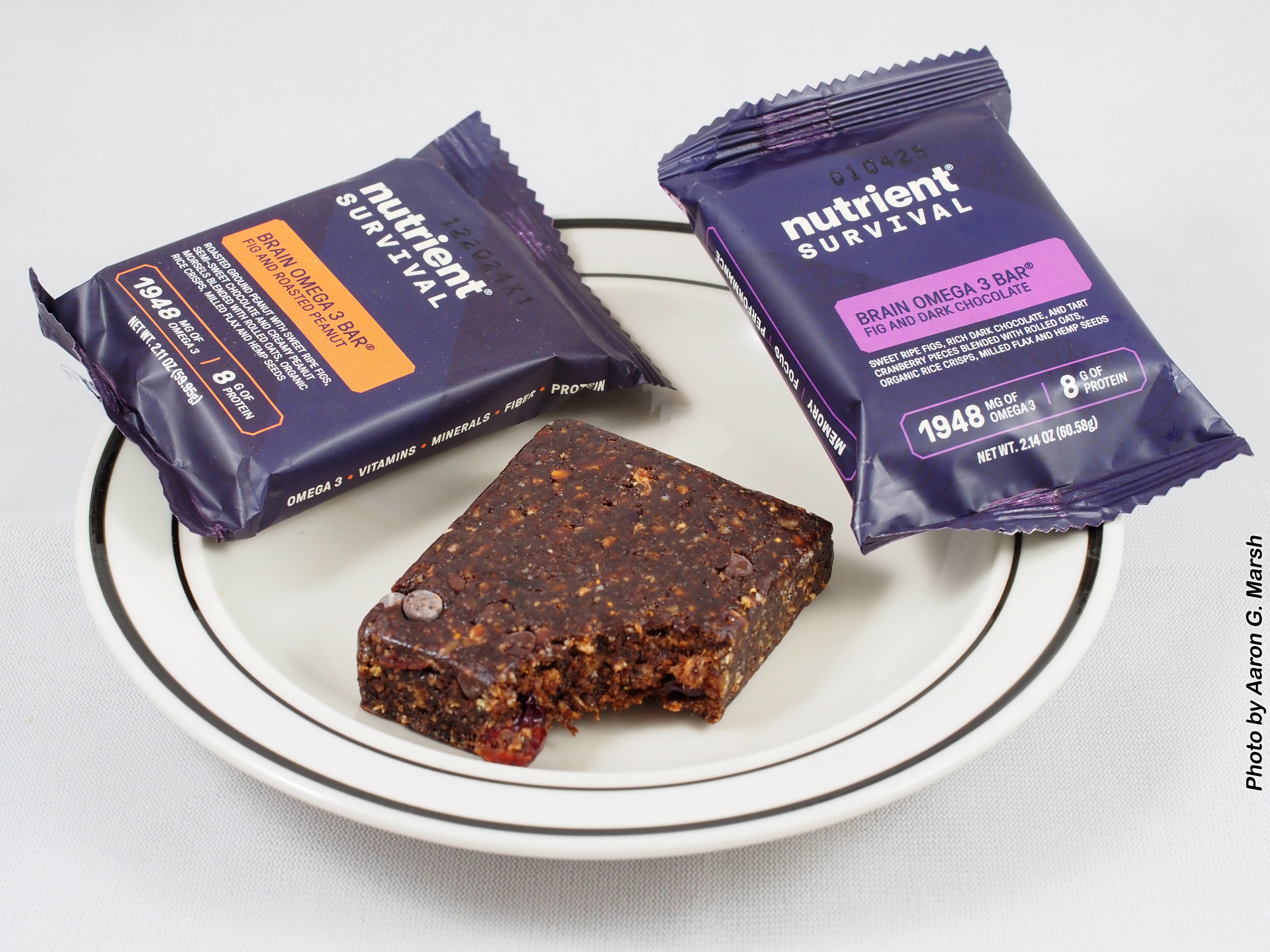
I obtained a few free samples to start and have since purchased my own, and this is purely from my experience. These gluten-free bars had been available through Amazon.com at $39.99 for a 15-pack, which breaks down to $2.67 per bar, and at present they aren’t available on Amazon — but you can go directly through Nutrient Survival, which now offers the 15-pack at $41.50 for a one-time purchase ($2.77 per bar) or $35.28 with a subscription ($2.35 per bar).
The cost stacks up well compared with other nutrition optimization and/or meal bars, especially “boutique” nutrition bars that can cost in the neighborhood of $4.99-6.99 or so apiece. I wanted to see if there was anything to these BrainCare bars from Nutrient Survival.
“We pack in 1,948 mg of Omega-3 in every one of those little bars,” noted Christianson (each bar is only about 2” by 2.5”, or roughly 50mm by 65mm). That exceeds recommended amounts needed of Omega-3 for males and females, so one bar per day should suffice. The bars also contain 40 essential nutrients and 8g of protein each.
The company notes that neurogenesis — the ability to build new brain cells — “is critically dependent” on the body’s level of docosahexaenoic acid (DHA), an Omega-3. Along with DHA, the bars also contain eicosapentaenoic acid (EPA) and alpha-linolenic acid (ALA) Omega-3s. The bars additionally have 1,771 mg of Omega-6 fatty acid, which boosts brain function, stimulates skin and hair growth and helps maintain reproductive health, bone health and optimal metabolism.
Christianson also emphasized the bars’ increased bioavailability of nutrients, since they’re baked into a bar, compared with pill- or powder-based supplements.
The Omega-3 fatty acids are found in fish oil and certain plant oils, and with so much Omega-3 in each of these bars, you might well think they’d be fishy-tasting. I tried two varieties: fig and dark chocolate, and fig and roasted peanut. I didn’t really like the fig and roasted peanut kind, personally, finding them indeed just slightly fishy or “off” tasting in some way, so I wouldn’t recommend those.
But I think the fig and dark chocolate ones taste great, and are by far the best choice if you try these. The consistency is very good; the bars are very dense but moist, not like some of the very “Playdoughy”-tasting nutrition and protein/meal-replacement bars I’ve tried in the past. You can actually see and taste the dark chocolate and figs in these bars, and to me at least, they’re good — almost craveable.
Note, however, that they are USA-made and (in terms of allergen info) contain fish and soy and are produced in a facility that processes eggs, tree nuts, peanuts, soy, wheat, dairy products and fish.
But do these bars do anything? Like do they improve brain function in any way? (Remember, the company labels these bars as supporting “memory, focus and performance” and perhaps also long-term brain health and regenerative properties.)
The short answer I would give is yes.
I will tell you this: after I tried them, I actually got a hankering for the bars one day and had two of them instead of just one. And afterward, I felt a perceptible boost in mental acuity; I felt extremely mentally sharp. So the bars did indeed seem to have some sort of positive brain/ cognitive focus effect.
The other thing I’ve noticed is when I don’t eat the bars. I went on a short trip and didn’t take them with me, and of course I was focused and sharp as I would expect. But when I returned from the trip, I started eating the bars daily again.
And that was when I noticed I was just a little bit sharper and more focused, consistently.
So these nutrition bars do seem to have an effect, again, in my own personal experience. I have found them easy to fold in as part of my daily routine, and I eat them as part of lunch. They’re satisfying; you could almost just eat one of these little guys and feel like you’ve had a meal, remarkably.
They’d certainly be great as an on-the-go meal. I intend to keep up with these bars and will report back on any longer-term effects I observe, but for now, they’ve earned a place in my pantry.
Content © Aaron G. Marsh
Any donation you can make helps me keep adding to this site. Thank you!
Make one-time donation ☺
Make monthly donation ☺
Make yearly donation ☺
Choose an amount
Or enter a custom amount ♥
Your contribution is very much appreciated!
Your contribution is very much appreciated!
Your contribution is very much appreciated!
DonateDonate monthlyDonate yearly



 I Do Not Like Mondays
Leave a comment