
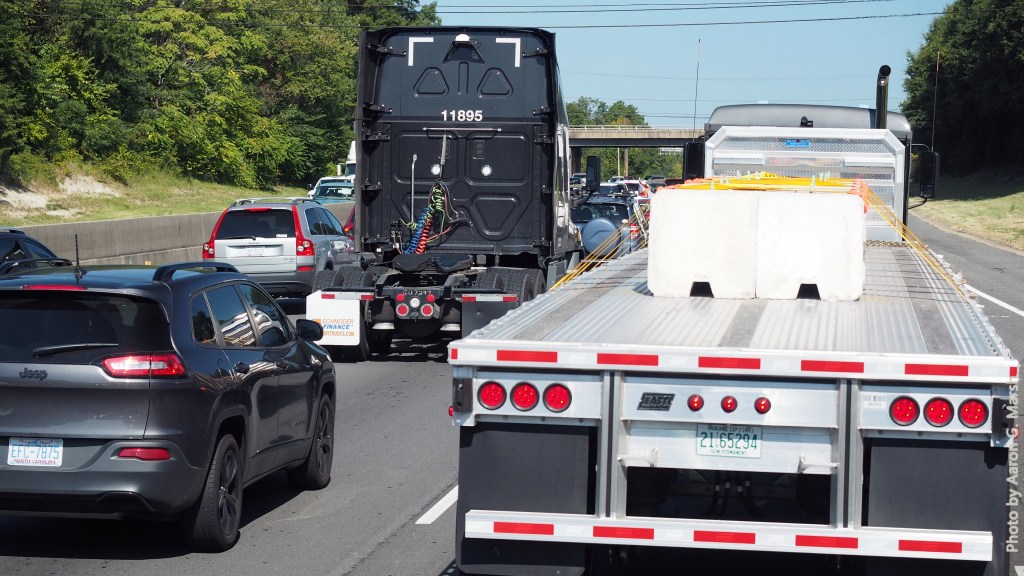
Where are America’s highways most knotted up? If you want to know, just look to truck drivers, since they’re out there professionally and they see the very worst.
The American Transportation Research Institute (ATRI), the research arm of the American Trucking Associations, did exactly that in a new study, using actual position and speed data from trucks’ wireless communication systems to see where the U.S. highway system experiences the greatest slowdowns.
Of course, that’s also where it’s worst for regular passenger vehicle traffic, noted Rebecca Brewster, ATRI president and chief operating officer. “The data that we use generates from trucks,” Brewster said, “but the fact of the matter is that cars at these locations are going the same speeds; they’re stuck in the same traffic.
“The locations need attention so that everybody can get moving,” she continued.
The study, which is conducted annually, is called — and names the — “Top 100 Truck Bottlenecks” in the nation.
Not Their First Rodeo
“This is now our 13th edition of this study,” said Brewster, speaking on Transport Topics Radio. “This is such an important annual analysis because it derives from real-world trucking operations, and the data and findings are used by state DOTs [departments of transportation] . . . to really pinpoint where they’re going to target investments” to help fix these biggest highway problems.
Brewster is somewhat known for and associated with this study, and even (proudly) has the nickname, “Bottleneck Becky.”
She noted that Texas “reigns supreme” as the state that has the most highway bottlenecks — 13 out of the top 100. “They do everything bigger in Texas, including traffic congestion,” Brewster said.
Further, nine of the 13 Texas bottlenecks are in Houston. “It always allows me, when I’m doing presentations around the country or radio interviews, to be able to say, ‘Houston, we have a problem,’” Brewster quipped. “It is a significant issue in and around the Houston area.”
Another standout in this and prior years’ lists, particularly on the top 10 bottlenecks, is Atlanta, Georgia’s “Spaghetti Junction,” a sometimes highly problematic convergence of major roadways with I-285. That spot claimed Nos. 5, 6 and 9 out of the top 10 bottlenecks. Brewster said the state of Georgia takes the ATRI report into careful consideration and is looking to make improvements.
There are also clearly some issues in Chicago, Ill., which appears four times in the top 20 freight bottlenecks of the 30 listed below.
(Sometimes) Worse Before It Gets Better
As these areas try to address their traffic bottlenecks, it can create more “short-term pain,” Brewster pointed out, since there are construction slowdowns. ATRI’s analysis, which utilized data from 2023, found traffic conditions “continue to deteriorate from recent years,” sometimes due to work zones resulting from increased infrastructure investment.
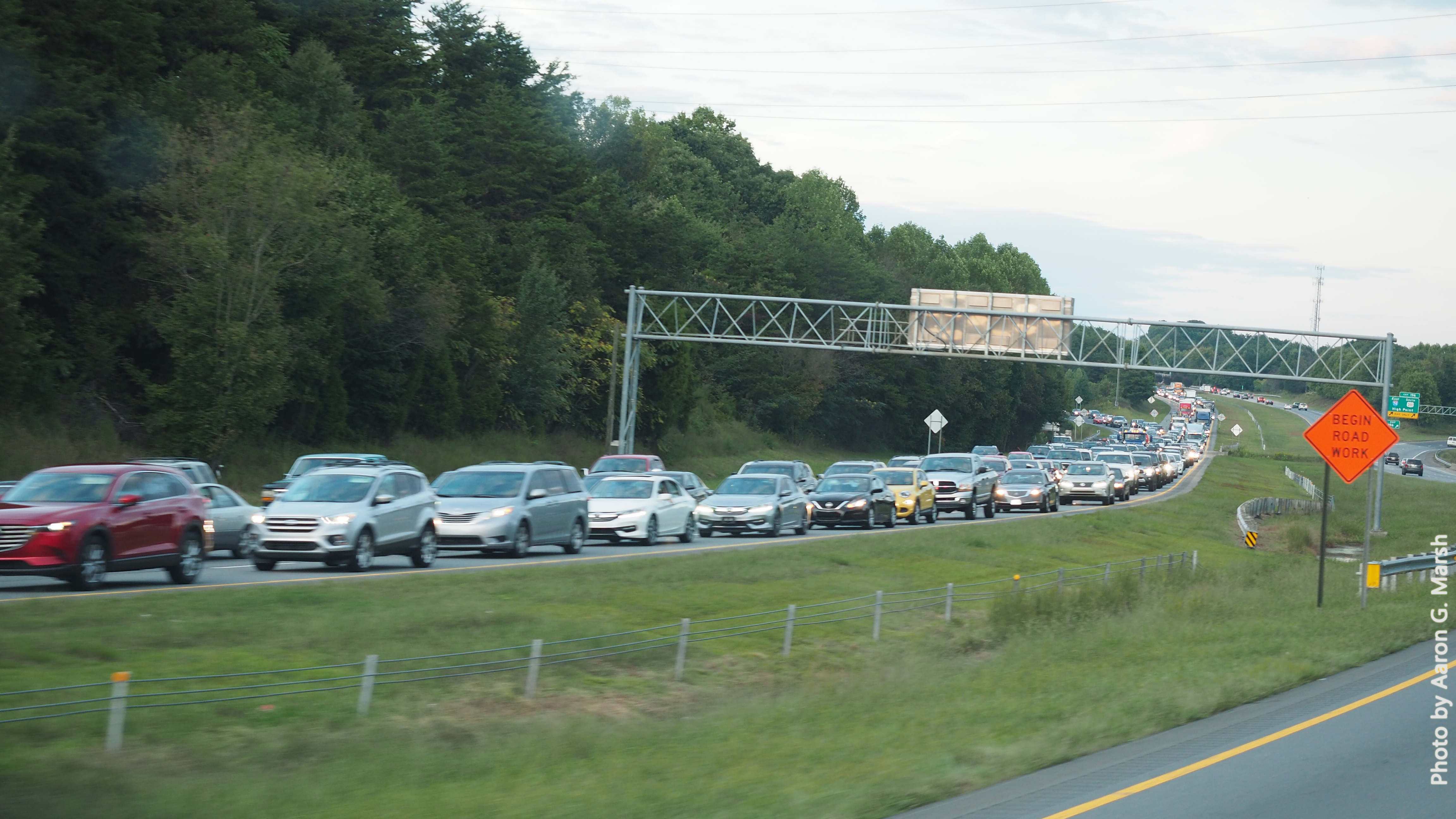
This 2024 traffic bottlenecks study measured the level of truck-involved congestion at more than 325 locations on the national highway system. The analysis used “terabytes of data from trucking operations” to produce a congestion ranking for each location, according to ATRI.
Average rush hour truck speeds overall, ATRI found, were 34.4 miles per hour — down nearly 4% from last year’s study. Within the top-10 bottleneck locations, average rush hour truck speeds were at 28.5 miles per hour.
The Top 30
So where are the most notorious highway bottleneck locations this year? For the sixth year in a row, the intersection of I-95 and SR 4 in Fort Lee, New Jersey is the No. 1 freight bottleneck in the country. Here are the rest of the top 30 bottlenecks:
2. Chicago, Ill.: I-294 at I-290/I-88
3. Chicago, Ill.: I-55
4. Houston, Texas: I-45 at I-69/US 59
5. Atlanta, Ga.: I-285 at I-85 (North)
6. Atlanta, Ga.: I-20 at I-285 (West)
7. Los Angeles, Calif.: SR 60 at SR 57
8. Houston, Texas: I-10 at I-45
9. Atlanta, Ga.: I-285 at SR 400
10. Nashville, Tenn., : I-24/I-40 at I-440 (East)
11. Los Angeles, Calif.: I-710 at I-105
12. Atlanta, Ga.: I-75 at I-285 (North)
13. Chicago, Ill.: I-290 at I-90/I-94
14. Cincinnati, Ohio: I-71 at I-75
15. Dallas, Texas: I-45 at I-30
16. McDonough, Ga.: I-75
17. Chicago, Ill.: I-90 at I-94 (South)
18. Ontario, Calif.: I-10 at I-15
19. Washington, D.C.: I-495 (West Side)
20. Hartford, Conn.: I-84 at I-91
21. Atlanta, Ga.: I-20 at I-285 (East)
22. Houston, Texas: I-45 at I-610 (North)
23. Nashville, Tenn.: I-40 at I-65 (East)
24. Chicago, Ill.: I-90 at I-94 (North)
25. Denver, Colo.: I-70 at I-25
26. Houston, Texas: I-10 at I-610 (West)
27. Gary, Ind.: I-65 at I-80
28. Portland, Ore.: I-5 at I-84
29. Baton Rouge, La.: I-10 at I-110
30. Vancouver, Wash.: I-5 at Columbia River
As noted above, it’s an involved process; it can take some years before a state can truly address and fix these kinds of traffic problems on highways. For instance, communities give their input, engineers design alternative highway fixes, and construction crews are where the rubber hits the road (literally) with those fixes.
“I have a personal goal, before I retire from this position, to see several of these bottlenecks come out of the top 10,” said Brewster.
Visit https://truckingresearch.org/2024/02/top-100-truck-bottlenecks-2024 for more information, including the full listing of the top 100 truck bottlenecks in the United States, based on 2023 data.
Hey you! No, not the next guy, *you* — please consider donating to this website. Thank you very much!
Make one-time donation/ gift ☺
Make monthly donation/ gift ☺
Make yearly donation/ gift ☺
Choose an amount
Or enter custom amount ♥
Your contribution is very much appreciated! It helps me keep bringing you quality content. Huge thanks! —Aaron
Your contribution is very much appreciated! It helps me keep bringing you quality content. Huge thanks! —Aaron
Your contribution is very much appreciated! It helps me keep bringing you quality content. Huge thanks! —Aaron
DonateDonate monthlyDonate yearly



 I Do Not Like Mondays
Leave a comment