

The snowy and icy weather is here for many in the northern hemisphere, and who knows what the rest of winter will bring. Here are my tips to help stay safe and handle it better.
Disclaimer: This is all my own opinion (and common sense) and things I’ve learned from experience growing up and living in the Northeastern and Mid-Atlantic United States regions, so your experiences may vary. But read on if you wish, and be careful out there!
Driving
(Note that the following refers to driving passenger vehicles, not commercial trucks or anything pulling a trailer.)
Let’s start with driving, since that is one of the most problematic and dangerous things about snowy and icy weather. First, when the roads are a real mess, don’t go out unless you must — wait for the roads to be cleared and safer, if possible. Let the snow plows do their job (without unnecessary cars in their way).
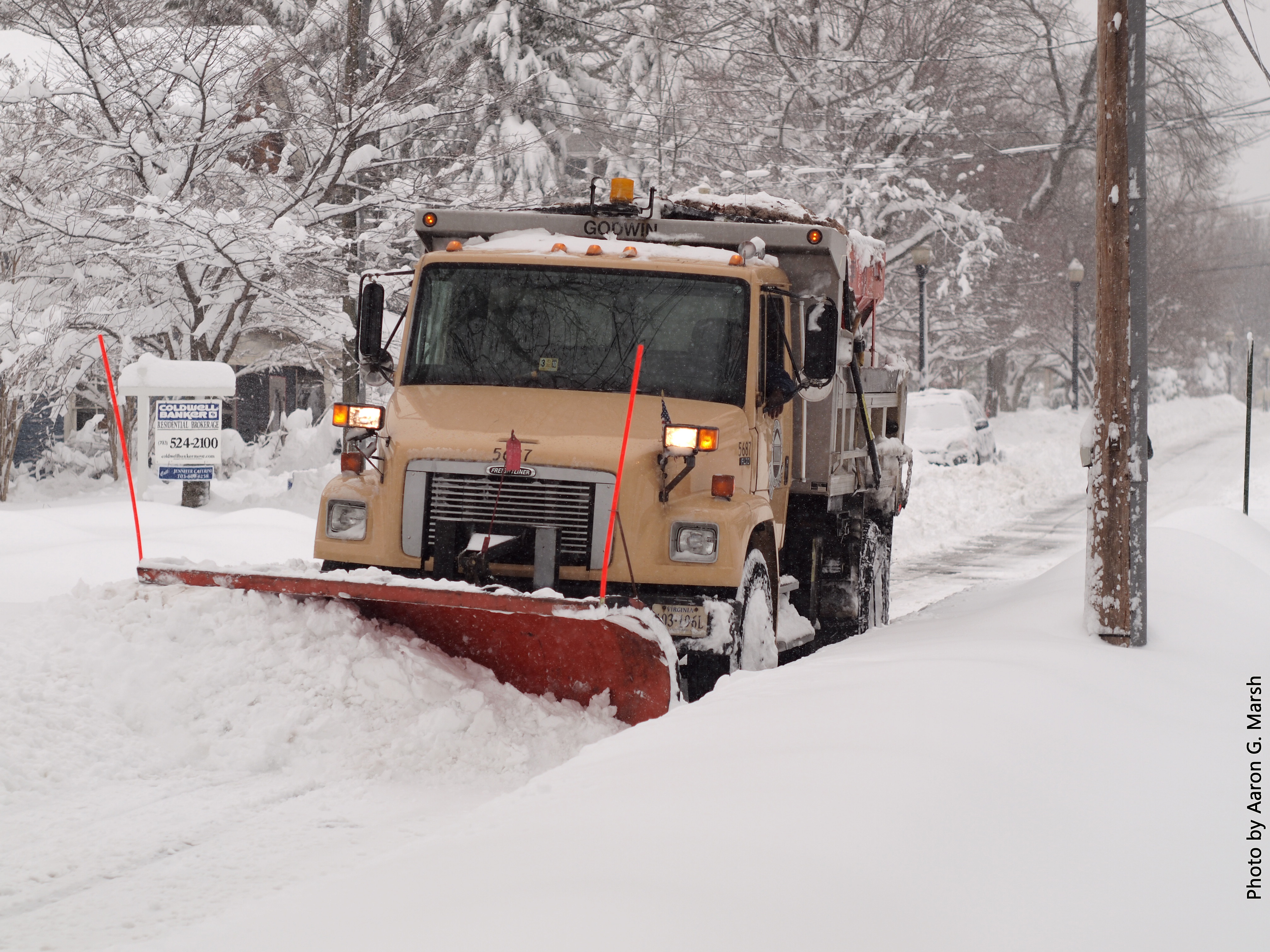
But if you do have to drive on snowy or icy roads, generally, take it easy and don’t tailgate — leave some space between you and the vehicle in front of you. If you don’t, you may not be able to stop in time if something sudden happens to the car ahead. And slow down before you come up to a turn, or else you may find yourself skidding past it!
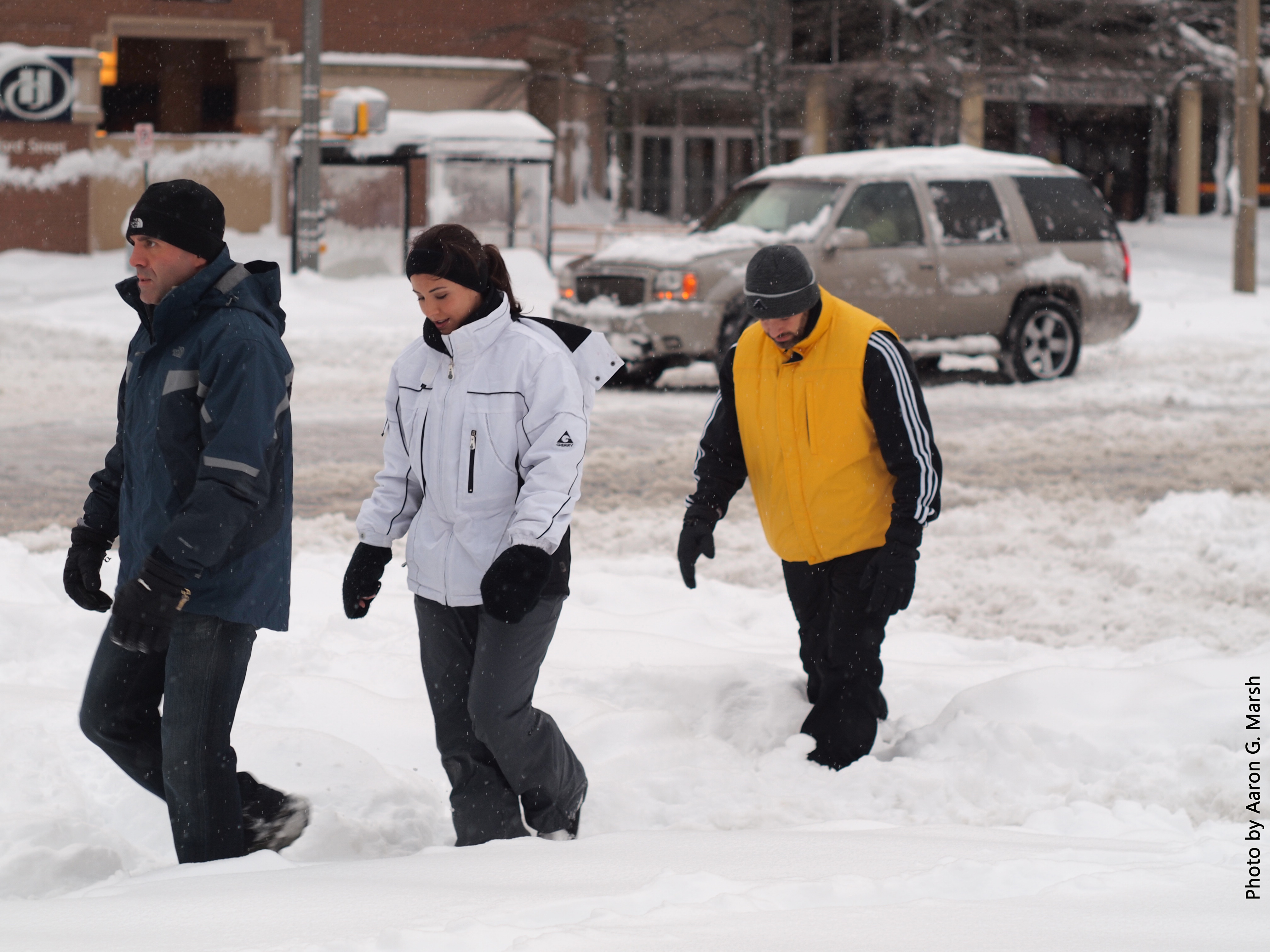
Also in the “first and foremost” category, use particular caution and slow it down around any pedestrian traffic, especially around schools or where kids (if they’re off from school) could be out playing in/near the streets.
Keep in mind that all-wheel drive or four-wheel drive vehicles, though they do have much better traction, do not make you immune to skidding around and ending up in a ditch, etc. But if your car has only two wheels driving, note that front-wheel drive vehicles can do fairly well because they have the engine weight right over the drive wheels, thus aiding in traction, while rear-wheel drive cars can benefit from some added weight in the trunk or bed (if a rear-wheel drive pickup) to add some more traction to the drive wheels.
All four of those vehicle types I just mentioned will behave differently in the snow, so know how your car responds and reacts on slippery surfaces. It’s a good idea to practice if you can! Find a snowy parking lot that’s empty, for example, and try out different maneuvers like hard turns, hard braking, accelerating and so on. (Be safe and extremely mindful of any other cars/obstacles while doing this, of course, if you do.)
In addition, putting chains on your tires can help get you more traction, but also tends to wear your tires the longer they’re used, so you may end up having to replace those tires after the winter season. A set of dedicated snow tires also can help significantly.
If you have room for it, keep a bag of cat litter or sand in your vehicle in case you do get stuck. Pouring that below wheels that are just spinning freely can boost your friction/traction and help get the vehicle out of a jam.
When driving on roads in the snow, downhills and turns/corners require extra caution and going slowly, since gravity and centrifugal forces, respectively, are pulling the vehicle onward, potentially causing you to lose control of the vehicle (and possibly going right where you don’t want to go, like into a ditch or the car in front of you).
Meanwhile, going uphill — particularly steep uphill climbs — requires more momentum so you don’t run out of steam, so to speak, and end up stuck/slipping and unable to continue onward. You’ll want to pick up some extra speed to make it up the hill, not so much take it easy as with going downhill or around corners.
Remember that different snowy road types make for different driving difficulty levels, but even a coating of an inch or two can be hazardous. Dry, powdery snow isn’t the worst offender but may be slippery nonetheless, while wetter, heavier snow can be very slick and dangerous. The same goes for “wintery mixes” of snow, sleet and rain, etc. Straight iced-over conditions are about the worst in terms of them being most slippery.
And on that note, watch out for the dreaded “black ice”. That’s when rain or melting snow runoff freezes and looks like wet road, but is actually frozen and very slippery indeed. Be particularly careful if there’s snow left on the ground and you get a sunny day that then dips down in temperature quickly after sunset; there may be melted snow runoff covering parts of the roads that can freeze into ice.
When it’s snowing, be sure your vehicle’s headlights are on for maximum visibility, just like in the rain. If you have automatic headlights and have a manual “on” setting, consider switching to it, since the sometimes-bright snow can fool some automatic light systems into failing to operate.
And this is very counterintuitive: icy or very slippery conditions can also confuse traction/stability control systems, so if you find your vehicle stuck and unable to move, you may need to switch such a system off. Those systems are designed to prevent wheel slip and spin, and wheelspin may be exactly what you need to get out of being stuck or move forward! But note well, that’s about the only time you would want to use the stability/traction control defeat button, if your vehicle is so equipped.
Other Thoughts
When significant snow hits or is coming (more than three or four inches or so), it’s often best not to salt your driveway or walkway right away. Shovel or snow blow (clear) driveways and walkways first, then throw down salt on those areas once snow has stopped falling.
What tends to happen is that people think salting driveways/walkways first or before the snow comes down will melt all the snow off and save them the trouble of having to clear it, but most of the time, it won’t. The salt will work for an inch or so of snow coming down and then it’ll freeze from the melted liquid, and you’ll just end up with a layer of ice at the bottom with whatever additional snow falls over it, making it potentially more slippery and also more difficult to clear driveways and walkways later.
Keep an emergency flashers kit (battery powered) in your vehicle in case something happens such as a tire blowing out — essentially, if you have to stop for any hazard. Look for flashers/beacons that are magnetic, so you can switch them on and stick them on your car. Have the batteries ready to pop in but not installed, so you don’t end up with any battery acid leaking in there and they’re ready to use if/when you need them (hopefully you never will!). Of course, use your hazard flashers as well; being more visible, especially during snowfall, could help alert other motorists to your stopped vehicle.
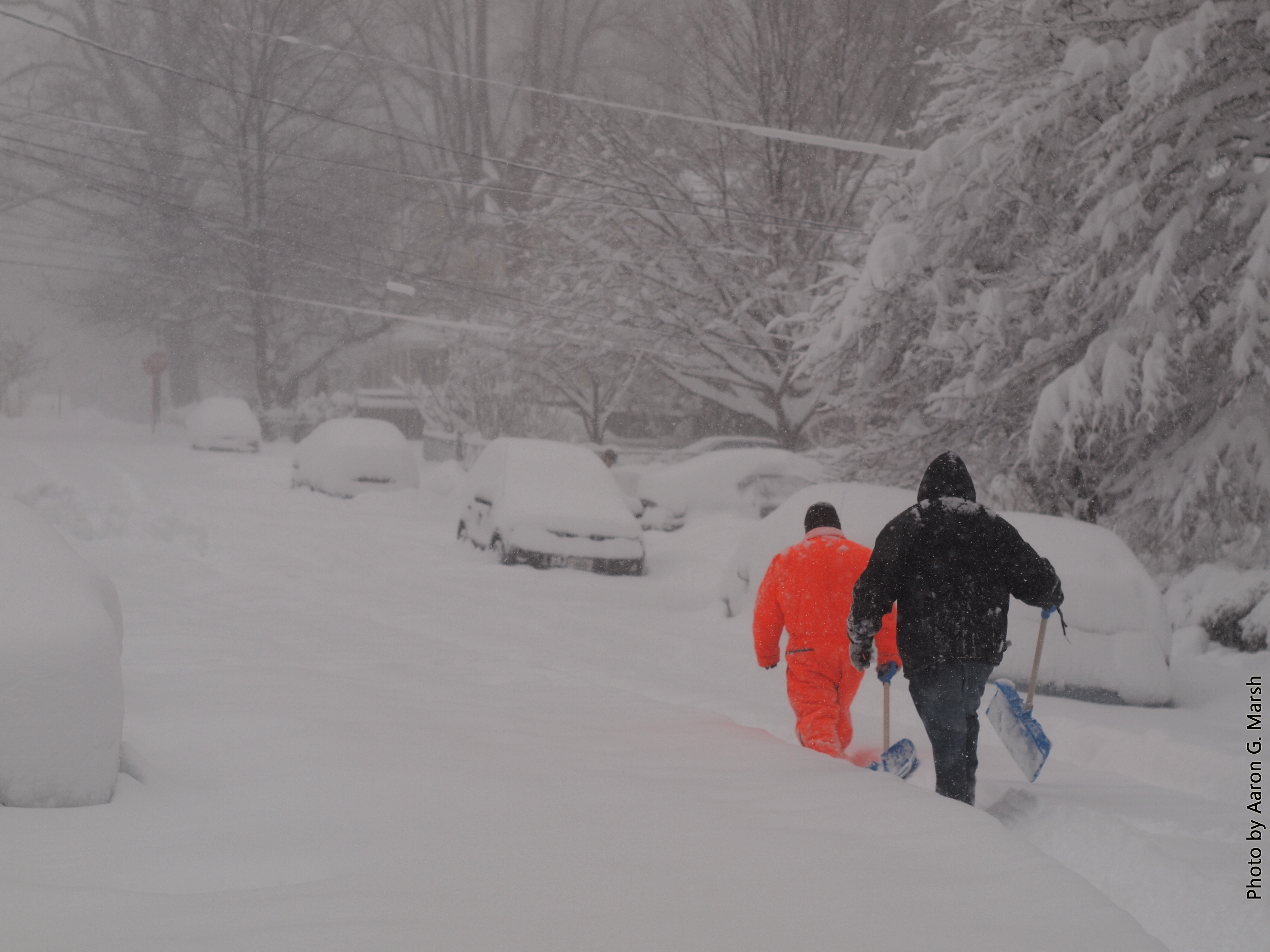
Also on that note, find a hat or coat or overalls, etc. that are bright, “highlighter orange,” green or similar color that’s extremely visible in lots of snow. You want to be seen by others, especially motorists going by.
Finally, go buy a box of medical exam gloves and keep a few pairs in your pocket and/or vehicle. I mean it! These come in handy in many ways.
Anytime you have to do some job out in the bitter cold, these gloves can help — they’re designed to be nonporous, and therefore lock in heat a bit. Slip them on under regular gloves to help insulate your hands, or use them on their own to provide at least some protection for your skin if you find yourself having to do some unexpected work in the bitter cold. These gloves will still provide plenty of dexterity and will allow you to swipe a touchscreen, so they can be very useful.
Just some of my thoughts from lessons learned from plenty of years out in the coldest, snowiest winter months. Don’t fear the snow and ice, own them!
Content © Aaron G. Marsh



 I Do Not Like Mondays
Leave a comment