
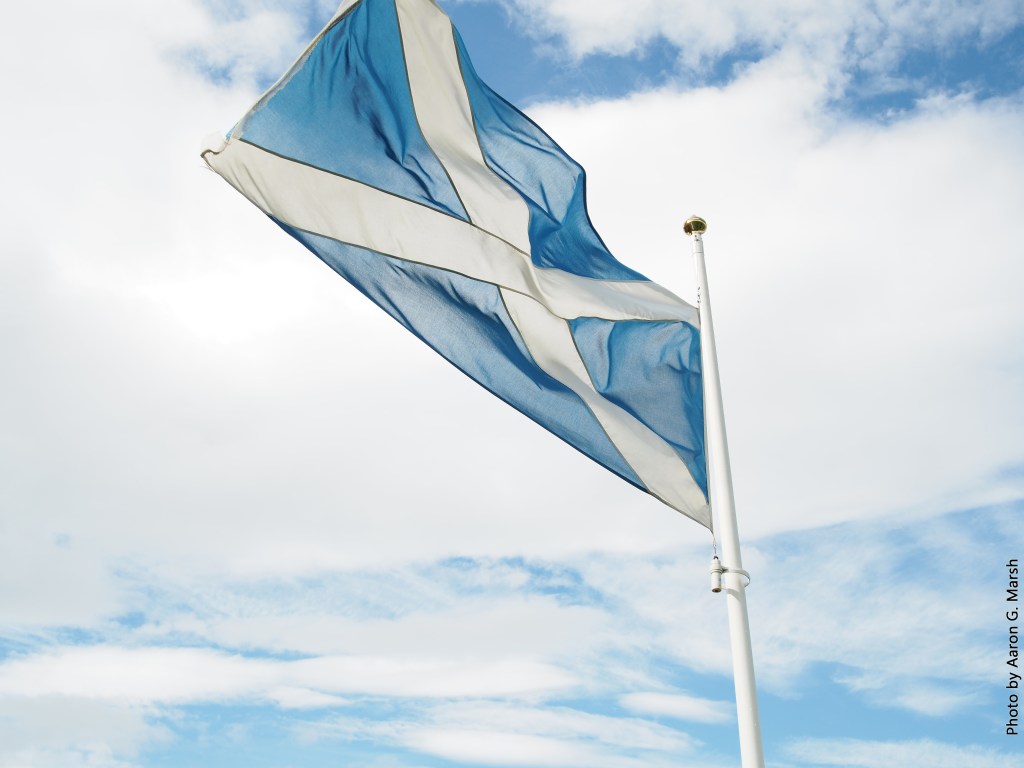
Man, I do not like Mondays. So to refocus, here’s something I do like, both from the immediate present and from so long ago it is forgotten — or plain unknown — to many.
This is “Flower of Scotland,” a 1969 folk song by The Corries that evolved into the unofficial national anthem of Scotland, and today is about as official as it gets. National anthems tend to have a lot of pomp and big band sound, but this one is very different and is my favorite among songs of this kind.
Before you click on the video to listen, this song and the performer I chose need some explaining. You can find a number of versions with slight variations, and aside from Scotland’s collective pubs, the song is probably heard most often at Scotland’s sports matches, where it is sung at the start and usually shortened and abridged.
So you have to start with the full lyrics. Here are the lyrics of “Flower of Scotland” closest to an official version:
“O flower of Scotland, when will we see your like again?
That fought and died for your wee bit hill and glen
And stood against him
Proud Edward’s army
And sent him homeward
Tae think again
The hills are bare now, and autumn leaves lie thick and still
O’er land that is lost now — which those so dearly held
That stood against him
Proud Edward’s army
And sent him homeward
Tae think again
Those days are past now, and in the past they must remain
But we can still rise now and be the nation again
That stood against him
Proud Edward’s army
And sent him homeward
Tae think again
And sent him homeward
Tae think again”
“Tae” of course is just “to” phonetically spelled more like Scots say it.
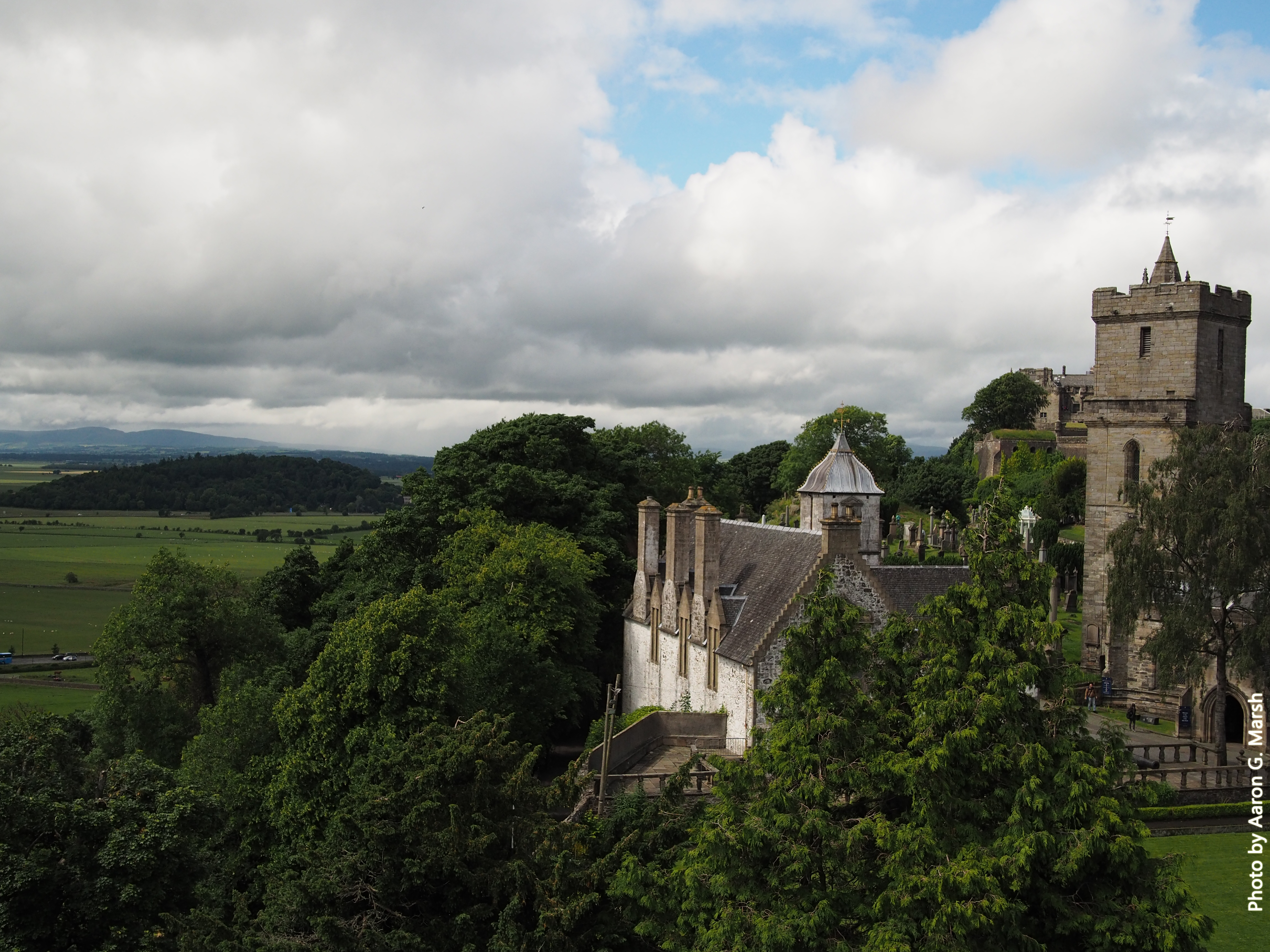
It’s a great song. I’ve heard this song in a birthday tribute to the late Queen Elizabeth II, which I found a powerful rendition, and I’ve sourced out at least a few dozen different recordings on YouTube. I’ve heard fully instrumental versions — one very impressive — that do the song all in bagpipes. The performance I’ve found that I feel is the very best is this one from the album “Hamlet by Night” by Peter Mitchell, who is actually South African Pietman Geldenhuys. No one sings it more clearly and with as much heart, in my opinion, and includes just the right musical accompaniment.
You don’t necessarily have to be Scottish to have this song affect you. It helps to know what this song is referencing. On June 23, 1314, a battle took place that looked pretty much like it could spell certain doom for the Scots, and that is the battle “Flower of Scotland” alludes to and praises.
This goes back to a time when countries as we know them were still being formed. The nation of Scotland had emerged from the Gaelic kingdom known as Alba (the Scots Gaelic word for Scotland), which started taking shape in the Dark Ages in the Midlands and was a part of Christendom, although it has now all but vanished from the awareness and remembrance of many.
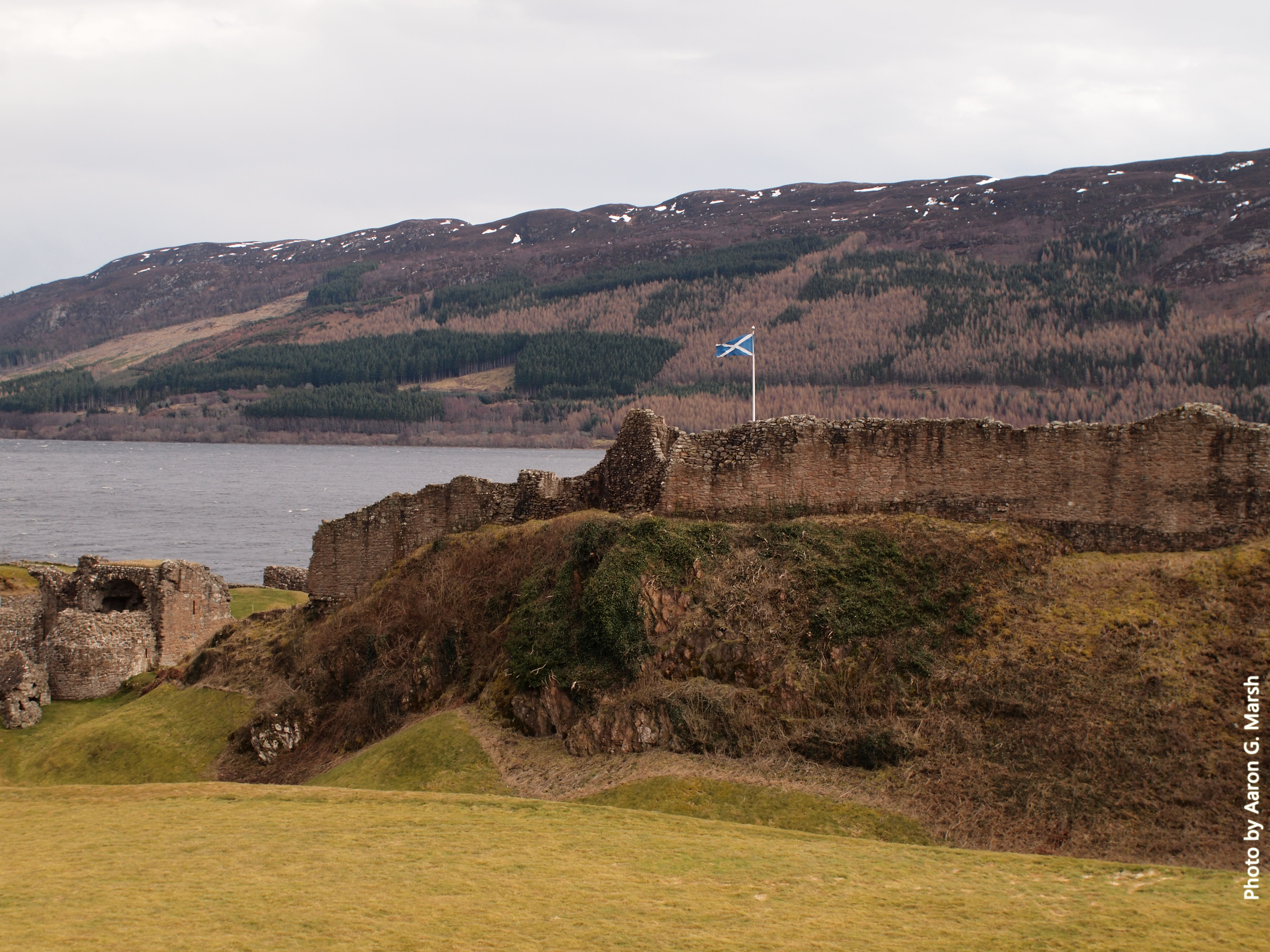
It is “more than probable” that Alba “would have been the name by which the first Scots who crossed over from Antrim [Ireland] at least fifteen hundred years ago called the land in which they found themselves — and is still today the name by which Scotland is called in modern Scots Gaelic,” writes author John Marsden in “Alba of the Ravens: In Search of the Celtic Kingdom of the Scots.” “The Irish proper noun Alba derives from Albion, which is the oldest recorded name for mainland Britain,” he notes.
Alba was “the first kingdom to rule effectively the diverse ethnic groups of medieval Britain,” writes Professor Stephen Driscoll in his book, “Alba: The Gaelic Kingdom of Scotland: AD 800-1124 (The Making of Scotland).” Information about Alba is somewhat scarce, since Viking raiders at the time often targeted and burned down monastic libraries, and the churchmen were the ones keeping the records at the time.
Alba contained “the various influences of Picts, Gaels, Britons, Angles and the Norse,” according to Driscoll. It had existed as a kingdom for over 300 years — for perspective, note that the United States of America had its 247th birthday as an independent nation in 2023. Alba faced many instances of great peril to its leadership.
A very pronounced such instance hit Scotland, as it had come to be called, in 1286. Alexander III, king of Scotland, was killed in a potentially suspicious nighttime accident on horseback. A complicated and chaotic time befell Scotland for a quarter of a century or so. For two separate periods totaling 16 years, the Guardians of Scotland — a group of lords who governed and protected the realm when necessary — took over stewardship of the kingdom. You may know of one of those guardians, Sir William Wallace, who was rather fictionally portrayed in the movie Braveheart.

Another of those guardians was Sir Robert the Bruce, also known as Robert Bruce, who seized the Crown of Scotland as Robert I in 1306. At the time, King Edward I of England wanted to reassert his nation’s overlordship of Scotland. Mind you, the Scots on various occasions had been open to the idea of a king of both England and Scotland, but they wanted their full independence and self-determination.
After King Edward of England died in 1307 and his son Edward II took the throne, we come to the battle hailed in “Flower of Scotland.” In 1314, King Edward II led a large invading force into Scotland to subdue Robert Bruce and in a larger sense, perhaps the nation of Scotland itself.
There is some wildly differing information on this; I’ve found reference to a Scottish army of about 6,000 men facing an English army of around 27,000 in this battle. Richard Burton’s 1813 account, “The History of the Kingdom of Scotland,” references an English army of “one hundred and fifty thousand foot, and almost as many horse” that brought the fight to King Robert’s Scottish army of some 30,000 men.
Those huge numbers seem less likely to me, but by all accounts, the battle on June 23, 1314 saw about four or five men fighting with the English to each Scotsman.
Pretty long odds for the Scots.
Yet in the two-day Battle of Bannockburn (also sometimes spelled Bannocks Bourn), Robert Bruce and his army somehow routed the English army — and sent proud Edward home to think again, as the song goes. King Robert, who had notable contributions to the battle himself, including one-on-one combat, is depicted in one illustration of the battle wielding a two-handed axe and cutting down enemies.
England and Scotland went at it for hundreds of years, and existed as two separate kingdoms until the early 17th Century, when the English crown fell to James VI, king of Scotland. King James worked unsuccessfully to unify the two kingdoms, and it was he who commissioned the Union Jack, which is the familiar flag of Great Britain you know. The flag overlays the Scottish cross of St. Andrew flag and the English cross of St. George flag.
Even so, England and Scotland didn’t unite to form Great Britain until both countries’ parliaments passed the Acts of Union in 1706 and 1707, respectively. The merged parliament convened in Westminster, England.
I’ve found plenty of Brits who identify first with either nation almost as if they were more like U.S. states, only with much stronger sense of differentiation; Scotland and England teams qualify separately for the World Cup, for example, and many products you’ll find from either component of the kingdom, though unified, say they’re “made in England” or “made in Scotland” instead of “made in Great Britain.” Thus their individualism and separate national pride is fierce.
The Scots had a chance, as you may recall, to vote themselves independent of Great Britain in a 2014 referendum, but they voted the notion down 55% no to 45% yes. Maybe the Scots feel that being part of the United Kingdom makes them stronger, and/or that they already have enough independence.
The Scottish Parliament notably was re-established in 1999 with law-making powers, and Scotland’s first prime minister, Donald Dewar, called its convening “the day when democracy was renewed in Scotland, when we revitalized our place in this our United Kingdom” and referenced “the distant cries of the battles of [Robert] Bruce and [William] Wallace.”
“Flower of Scotland” has an interesting message, hearkening on the one hand to a ferocious and valiant Scottish people of the past and on the other calling on present-day Scots, while part of a peaceful, united kingdom, to rise to greatness in their own way as well.
Content © Aaron G. Marsh


 I Do Not Like Mondays
Leave a comment